Offshore marine logistics operates in a demanding environment where safety, discipline, and regulatory compliance are not optional — they are foundational. As bulk cargo volumes increase across Central Africa and the Gulf of Guinea, the complexity of ship-to-ship (STS) transfers, barge navigation, and offshore transshipment activities continues to grow.
In such an environment, structured safety management systems and compliance with maritime regulations are essential to ensuring operational continuity and protecting personnel, assets, and the marine environment.
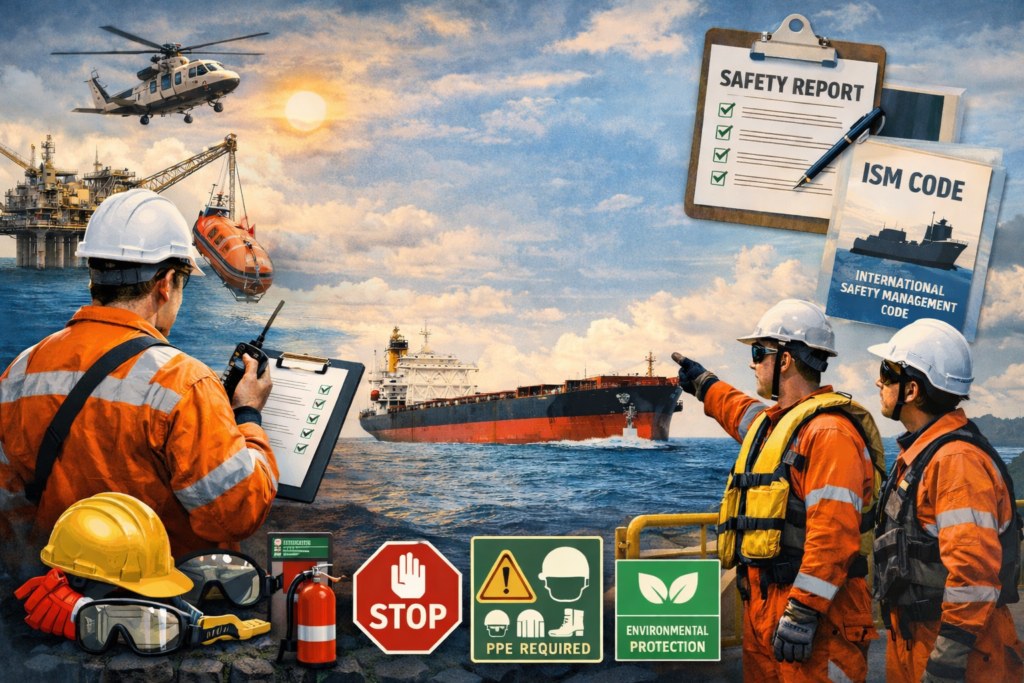
The Nature of Offshore Risk
Offshore operations inherently involve multiple dynamic factors:
Open-water conditions
Vessel movement and stability management
Heavy cargo handling equipment
Complex coordination between ships, barges, and cranes
Weather variability
Unlike conventional berth operations, offshore cargo transfers occur outside controlled port infrastructure environments. This increases exposure to operational risk if not managed through disciplined procedures and trained personnel.
Effective risk mitigation begins with structured planning and clearly defined operational protocols
Regulatory Framework and Industry Standards
Offshore marine activities are governed by a combination of international maritime regulations, flag state requirements, port authority rules, and industry best practices.
Compliance areas typically include:
Navigation and anchorage regulations
Stability and loading guidelines
Crew certification and training standards
Equipment inspection and maintenance schedules
Environmental protection protocols
Adherence to these regulatory requirements ensures not only legal conformity but also operational resilience and commercial credibility.
Safety Management Systems
A structured Safety Management System (SMS) provides the framework for managing risk in offshore operations. Such systems generally cover:
Defined operational procedures
Emergency response planning
Incident reporting protocols
Crew training and drills
Continuous improvement processes
Through consistent application of safety management principles, marine operators create predictable, repeatable operational environments — even under variable offshore conditions.
Documentation, supervision, and accountability are central to maintaining effective safety oversight.
Crew Competence and Training
Crew expertise remains one of the most critical safety components in offshore logistics. Officers, engineers, crane operators, and deck personnel must be properly trained to manage:
Ship-to-ship positioning
Cargo stability monitoring
Communication between vessels
Safe operation of lifting equipment
Response to changing weather conditions
Practical experience in local waters further enhances operational confidence and decision-making accuracy.
Regular drills and safety briefings reinforce preparedness, while continuous monitoring ensures adherence to established standards.
Equipment Maintenance and Operational Readiness
Floating cranes, barges, tugboats, and support vessels form the backbone of offshore cargo operations. Proper maintenance and inspection routines reduce mechanical failure risk and contribute directly to operational safety.
Preventive maintenance schedules, inspection checklists, and equipment testing procedures ensure assets remain fit for purpose. Technical oversight supports performance reliability and minimizes downtime.
In high-volume bulk cargo environments, asset reliability is inseparable from safety management.
Environmental Responsibility
Offshore marine operations must also consider environmental protection. Bulk cargo handling presents potential exposure to:
Dust emissions
Spillage risk
Fuel handling hazards
Waste management challenges
Structured environmental controls, including cargo handling best practices and waste management protocols, reduce environmental impact.
Responsible operations not only comply with regulatory requirements but also safeguard long-term sustainability and community trust.
Communication and Coordination
Offshore logistics demands precise coordination between multiple actors:
Vessel masters
Barge operators
Marine coordinators
Crane teams
Shore management
Clear communication protocols minimize misunderstandings and reduce operational delays. Designated reporting channels and defined command structures support rapid decision-making and risk response.
Effective coordination strengthens overall safety outcomes and enhances cargo movement efficiency.
Commercial Implications of Compliance
Safety and compliance are not separate from commercial performance — they are directly connected. Non-compliance or safety incidents can result in:
Operational downtime
Financial penalties
Insurance complications
Reputation damage
Loss of client trust
Conversely, consistent adherence to safety standards builds long-term credibility with cargo owners, charterers, port authorities, and regulatory agencies.
Stable safety performance supports predictable operations and sustainable growth.
Building a Culture of Accountability
True safety performance goes beyond procedural documents. It depends on a culture where personnel at all levels understand their responsibilities and actively participate in maintaining standards.
Accountability, supervision, and reporting transparency reinforce disciplined offshore operations. Leadership commitment to safety creates a structured environment in which operational excellence can develop sustainably.
In offshore bulk logistics, safety culture is a competitive advantage.
Conclusion
As offshore ship-to-ship transfers and barge-based transshipment continue expanding across Central Africa, safety and regulatory compliance remain central pillars of operational success.
Structured safety management systems, trained crews, reliable equipment, and disciplined coordination enable operators to manage offshore complexity with confidence.
In high-volume bulk cargo environments, safety is not merely a requirement — it is the foundation upon which reliable marine logistics is built.
Through consistent adherence to maritime standards and responsible operational practices, offshore logistics providers can support regional trade growth while maintaining operational integrity and environmental stewardship.
© Copyright 2026, cm2s.net. Developed by Deep-Tech Computing Private Limited, www.deeptechcomputing.com